Report and Publish a Story Like a Journalist
Maps to: Journalist · Analyst · Author · Researcher · Editor
You're going to pick a topic you care about, work out what YOU think is true about it, dig up the proof, and publish a 1,500 word story that argues it. The skill is making a case you can defend, which means deleting anything you cannot back up. Anyone can repeat what's already out there. Having a point of your own, and proving it, is the job.
You're done when: A 1,500 word story, published, that argues one thing of yours, backed by 10 or more sources you opened and checked yourself (the actual study or the official numbers, not someone's article about them). You can point at the one sentence that is YOUR point. Not 'I wrote about a topic,' but 'I argued something, in my own words, and checked every fact.'
How this shows up on a resume or college app
I researched and published a long-form piece on topic, finding a specific angle, verifying 10+ primary sources, and writing the argument in my own voice. I learned the difference between summarizing what AI generates and actually thinking, which is the only thing that makes writing worth reading.
When you finish, BuildMe drafts your Common App activity description from what you actually built.
Not sure yet? Play 5 minutes as a journalist first and see how the work feels.
The plan
- 1
Step 1
Lead with the thing you suspect is true
Start with the thing you already suspect is true and nobody's saying out loud: something your school or town does that makes no sense, a thing everyone believes that you think is wrong, a world you know from the inside. Write it as one sentence you're going to argue. That sentence is your point, and the note you keep it in is where this whole thing starts. It has to be something a sensible person could disagree with. If nobody could, you're about to write a summary, and a summary is the one thing nobody needs from you.
- 2
Steps 2-3
Find the proof, and check every bit of it
Now you go and get the proof: 10 or more sources, and a source means the original thing itself (the actual study, the official numbers, the person who was there), not someone's article ABOUT it. AI search is genuinely great at finding leads, and it also makes up sources that look completely real. So the rule is simple: you open every one yourself, and anything you can't find at the original doesn't exist. A story built on a made-up source is worse than no story. Fair warning, this is the slow part, and running over the two hours is normal, not you being bad at it.
- 3
Steps 4-5
Write every sentence yourself, then cut
The writing, and the wall: looking things up feels productive forever, and starting to write is where most people stop. So write it badly and fix it later. Every sentence is yours (a tool can hand you an order to put things in, nothing more), because the whole value is that it reads like a person thinking. Then the hard part: read your own draft and delete every stretch that just repeats what's already out there instead of arguing your point. At every paragraph, ask what you are actually saying. This is the longest stretch of the project. Going over two hours is normal, and the tidy-up at the end is skippable if you're out of steam.
- 4
Step 6
Put it out and get people to read it
Put it out at a real link, get it in front of at least 5 real people, and pay attention to what they disagree with. Someone disagreeing is the good outcome: it means they read closely. Whatever they argue with is your next story. Putting your name on an argument in public is the part no class can fake.
Tools you'll use
Real examples for inspiration

How Long Does It Take to Plan a Bridge?: timelines of 67 major US bridges
Brian Potter

America's Electricity Gap: why US power demand is outracing supply
Joseph Politano

How Does Our Taste in Movies Change With Age?: 1M-rating data analysis
Daniel Parris

How Bible Sales and Chipotle Explain the Economy: the 'casino economy'
Kyla Scanlon

Why Scotland Succeeded: it was capital, not education
Anton Howes
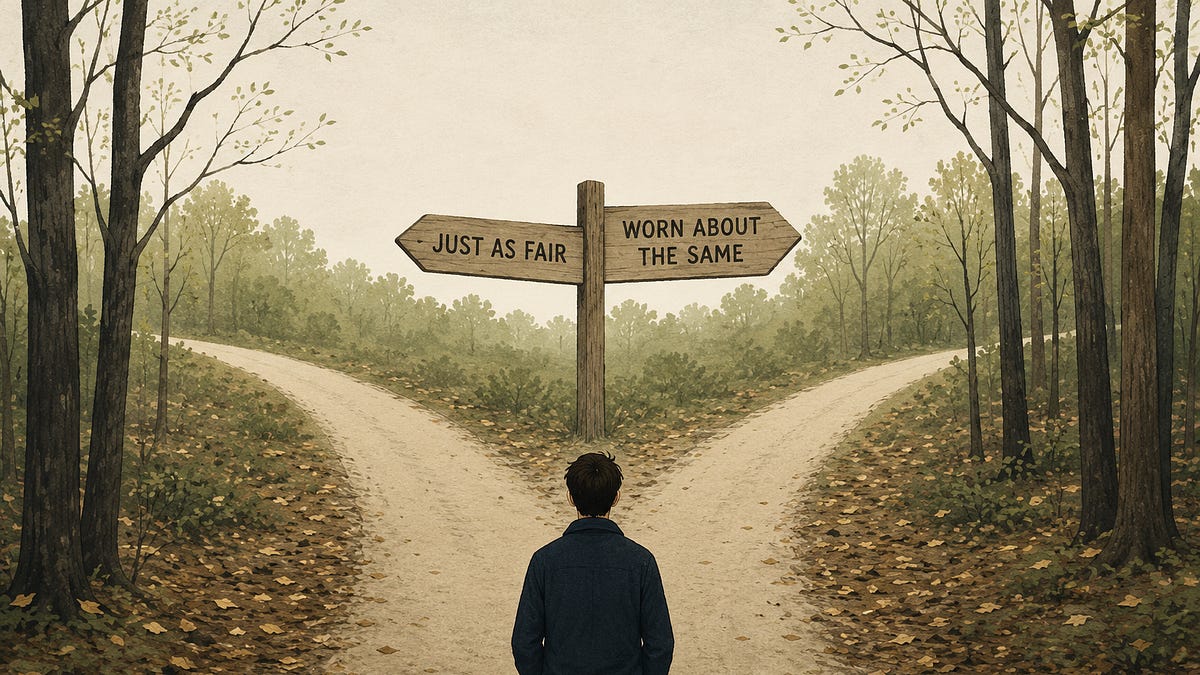
The Real Meaning of 'The Road Not Taken': what everyone gets wrong
David Epstein